Key facts
- Most common UK size
- 8ft x 6ft
- Minimum side clearance
- 300mm
- Usable depth for a bench
- 2.4m
Most people buy a shed one size too small. The usual cause is measuring the items to be stored rather than the space needed to move around them, so the shed fills up and becomes a place things are pushed into rather than taken out of.
Start with the largest item
Measure your largest item — usually a mower, wheelbarrow or bike — and add 600mm of standing room in front of it. That figure becomes your minimum internal depth. Everything else can be stored around the edges or on shelves.
Typical sizes and what they hold
| Nominal size | External footprint | Realistically holds |
|---|---|---|
| 6ft x 4ft | 1.8m x 1.2m | Hand tools, small mower, a few boxes |
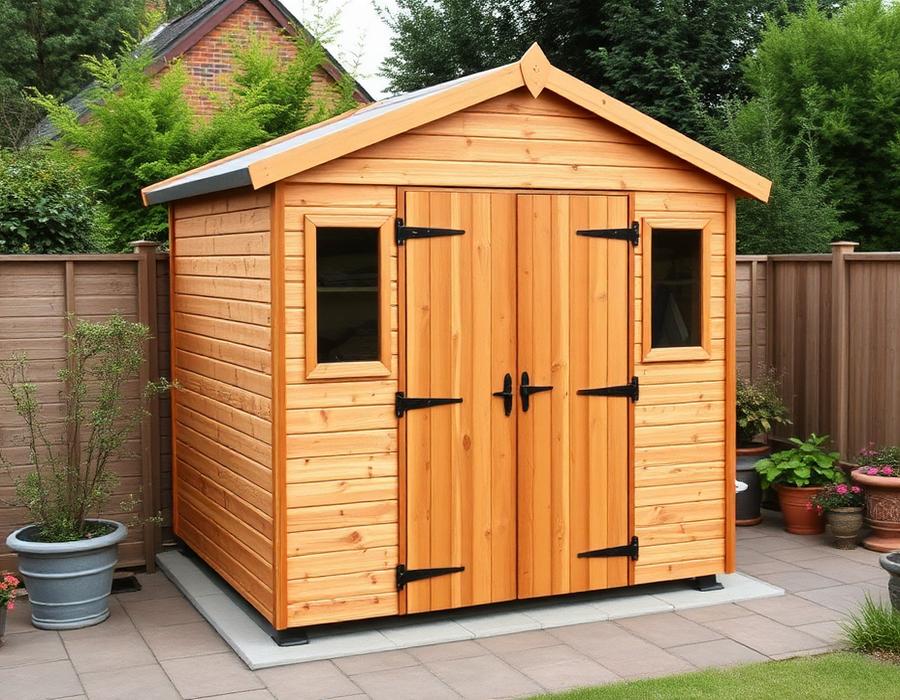
| 8ft x 6ft | 2.4m x 1.8m | Mower, bikes, tools, garden furniture in winter |
| 10ft x 8ft | 3.0m x 2.4m | All of the above plus a workbench |
| 12ft x 8ft | 3.6m x 2.4m | Bench, machinery and full-length storage racking |
Clearances people forget
- Leave at least 300mm on each side so you can treat and repair the cladding.
- Doors need swing space — check whether they open in or out before positioning.
- Guttering and roof overhang add 50–100mm to the footprint on each side.
- The base should be the same size as the shed floor, not larger, so water runs away.
If you are between two sizes, go up. The price difference between an 8x6 and a 10x8 is usually far smaller than the cost of replacing a shed that turned out to be too small.
Outbuilding Online may earn commission through affiliate links. Product listings and prices are provided by Awin retailer feeds and were accurate at the time of ingestion. Always check the retailer's site for current price and availability.